About
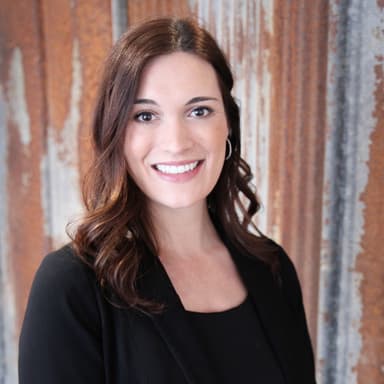
Amber Winter
GTM Advisor and founder of GTM Foundation. Currently serving as a full-time CRO. Madison, WI. Named to the Top 50 Women Chief Revenue Officers of 2025.
I spent the better part of a decade inside Web Courseworks, an EdTech platform that helped associations and professional societies deliver continuing education online. I joined when the company was doing custom development work on a project basis, and I was there when it was acquired by Forj Software.
What happened in between is the work I'm most proud of, and the reason I do what I do now.
We rebuilt the business model from the ground up. Moved from hourly custom work to a flat-fee managed services model, which changed everything about how we sold, how we retained clients, and how we could forecast revenue. Then we built the infrastructure to support it: a documented sales process, a real ICP, a customer success framework, and a CRM that reflected how deals actually moved, not how someone thought they should move.
We ended up with 97% gross retention and 107% net retention across a client base of nearly a million users. Those numbers made the company acquirable. The acquisition by Forj was a validation of everything we'd built.
My approach is what I call "systems before software." I build the manual process first, prove it works with real data, then automate the parts that make sense. That sequence matters. If you can't describe how a deal moves through your pipeline, a CRM won't fix it. It'll just make the confusion more expensive.
After Web Courseworks, I took on CRO roles building revenue functions from the inside. GTM Foundation is that methodology, systematized, so founders and operators can run it without hiring a full-time CRO. I occasionally take on advisory work for a specific problem, but the program is where most of what I know lives now.
The work
Web Courseworks → Forj Software
EdTech platform · Revenue leadership · Acquisition
$9.2M
from $3.5M ARR
97%
gross retention
107%
net retention
Led business model transformation from project-based custom development to flat-fee managed services. Built the GTM infrastructure (ICP, sales process, customer success framework, CRM) that supported the growth and made the company acquirable.
SuiteDynamics
NetSuite consulting · Chief Revenue Officer · Current
Serving as full-time CRO. Defined the ICP from actual closed-won data and customer interviews, then built a qualification framework the team uses to evaluate new opportunities and walk away from poor-fit deals early. This is the methodology in GTM Foundation, run from inside the revenue function.
Eneration
Energy services · GTM Foundation methodology
Built the sales infrastructure for a company with a proven service and a new sales hire who came from the industry, not from a structured sales background. Delivered ICP documentation, a qualification framework, a discovery playbook, and CRM setup. Within two months, the Director of Business Development was running deals independently without the CEO in the room.
How I think about this work
The problem is almost never the sales hire.
When a sales hire isn't performing, the instinct is to question the person. Usually the problem is that there's no system for them to run. No documented ICP, no stage definitions, no playbook. I've seen great salespeople fail because they were dropped into a founder-led sales environment with nothing to work from. Fix the system first.
Your best customers already exist. You just haven't documented them.
Every company I work with has customers who are easy to work with, expand without prompting, and refer others. And customers who churn, require constant hand-holding, and were probably the wrong fit from the start. That pattern is in your closed-won data. We surface it and turn it into a qualification framework your team can use on the next call.
A CRM won't fix a process problem.
Software is a multiplier. If the underlying process is clear, CRM makes it faster and more visible. If the process isn't clear, CRM gives you faster chaos. I build the manual process first, often in a spreadsheet or a doc, prove it works, then configure the tool to match. Not the other way around.
Start with the program
Get your free GTM Health Score. You'll see where the foundation is strong, where it's broken, and what to fix first.
Get your free GTM Health Score